What it feels like
- Stiff neck and upper traps after screen time
- Tension headaches starting at the base of the skull
- Ache between the shoulder blades
- Neck that clicks or feels tight turning to one side
The mechanics behind it
Forward head, longer lever
As the head moves forward of the shoulders, its weight acts on a longer lever, so the neck extensors must work harder to hold it up. Over a full working day that becomes fatigue and pain.
The upper back sets the neck's starting point
A rounded thoracic spine tips the base of the neck forward, so the head has to crane up to look at the screen. Freeing the upper back changes the neck's position without forcing it.
Deep neck flexors switch off
The small muscles at the front of the neck that stabilise it lose endurance with prolonged screen postures, and the bigger surface muscles take over.
Breathing up into the neck
Shallow upper-chest breathing recruits neck and shoulder muscles thousands of times a day. Restoring rib and diaphragm movement takes load off them.
Common movement faults
- Screen too low, chin poking forward
- Hours without changing position
- Phone held at waist height while scrolling
- Shrugging and breathing up into the shoulders under stress
Simple self-checks
Wall posture check
How: Stand with heels, bottom and upper back against a wall.
What to look for: Notice how far the back of the head is from the wall and whether it can reach it comfortably without tilting the chin up.
Chin nod hold
How: Lying on your back, gently nod the chin as if saying yes and hold.
What to look for: If the big muscles at the front of the neck pop out or you cannot hold for 10 seconds, deep neck endurance is low.
Rotation check
How: Sitting tall, turn your head to each side.
What to look for: Compare range and where tension appears.
Stop any check that reproduces sharp pain, and do not push through numbness or pins and needles.
A staged movement plan
Calm
Break up long static positions
- Movement snacks every 30 to 45 minutes
- Screen at eye level
- Gentle neck rotations
Restore
Free the upper back and ribs
- Thoracic extensions
- Open books
- 90/90 breathing
Load
Build deep neck and upper-back endurance
- Chin nods
- Prone Y raises
- Band pull-aparts
- Rows
Integrate
Make it the default at work and in training
- Workstation set-up
- Carries with tall posture
- Daily desk mobility routine
Move to the next stage when the current one feels easy and symptoms are settling. A flare-up usually means stepping back one stage, not stopping.
See a clinician first if you have
- Numbness, weakness or pins and needles in both arms or the hands
- Problems with balance or walking
- Neck pain after a fall or car accident
- Sudden severe headache, especially with neck stiffness or fever: seek emergency care
Videos
“How to do Kneeling Shoulder Workout” | Push-Press | Upright Rows | Clean N Press | Overhead press
YouTube · @bodygntx
How to Bent - Over Rowing | Rest n Go Bent-over Rows for killer Upper Back
YouTube · @bodygntx
Read next
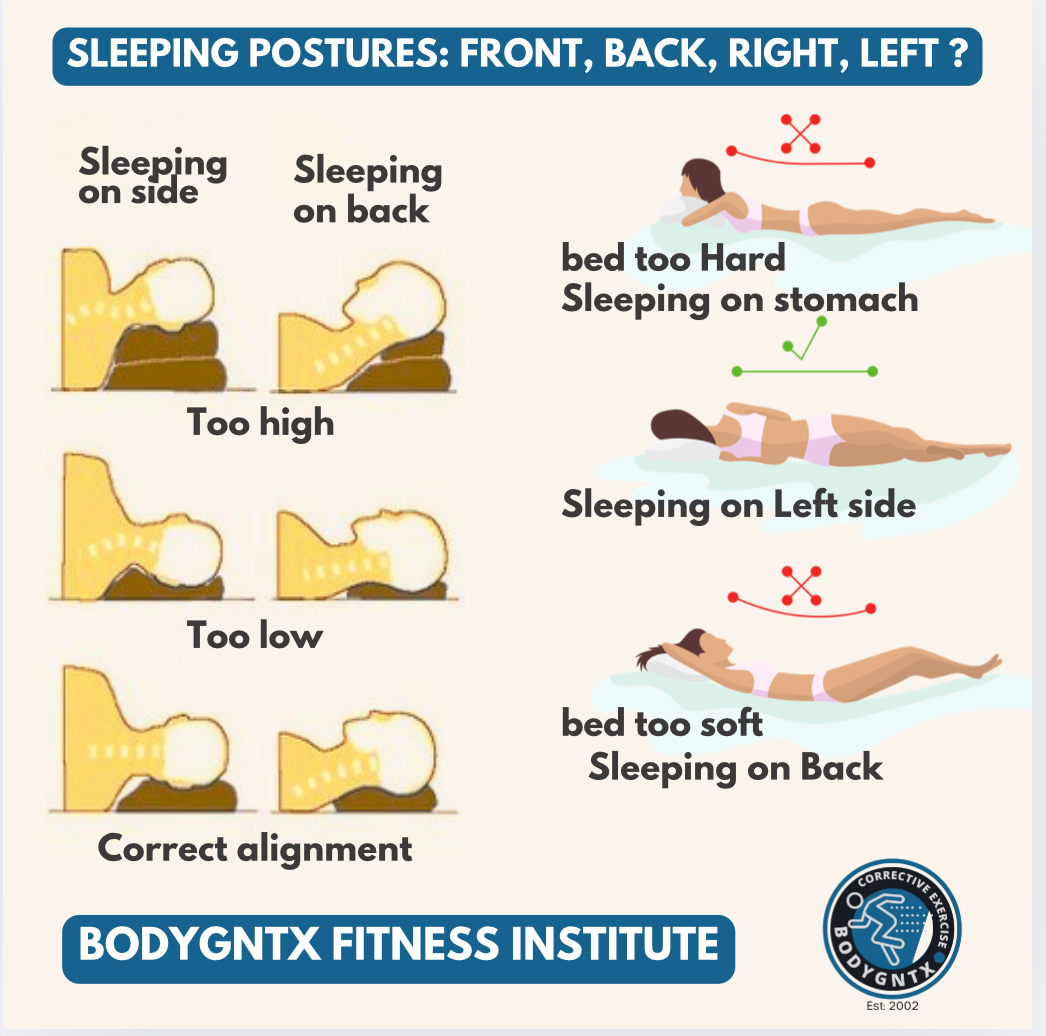
The Science and Tradition of Optimal Sleeping Posture: Insights for Movement Mechanics Specialists
The Science and Tradition of Optimal Sleeping Posture: Insights for Movement Mechanics Specialists Sleep is not merely…
Read · Jan 2025The Effects of BMXStrength Strength Training Technique on the Development of the Lower Head of the Chest Muscles in Males
Male Lower-Chest Muscle Growth as Affected by the Strength-Training Method Known as BMXStrength Introduction: In this…
Read · Feb 2023Electromyographic Analysis of Shoulder Overhead Press with Mid-Point Pause and Forceful Push: Enhancing Injury Protection, Fast-Twitch Fiber Activation, and Hypertrophy
Title: Electromyographic Analysis of Shoulder Overhead Press with Mid-Point Pause and Forceful Push: Enhancing Injury…
Read · May 2023Posture and Neurology: Decoding the Blueprint for Lifelong Well-Being
In today’s digital age, where hunching over screens has become the norm, understanding the profound impact of posture…
Read · May 2023