
What it feels like
- Ankle that rolls on uneven ground
- Feeling wobbly on one leg
- Stiff ankle that limits squat depth
- Ache on the outside of the ankle after sport
The mechanics behind it
Proprioception is the first casualty
Ligaments carry position sensors. After a sprain, the reflexes that correct a rolling foot can be slower, so the ankle gives way before muscles react.
Dorsiflexion and the knee above
A stiff ankle that does not let the shin travel forward forces the foot to turn out or the knee to cave during squats, lunges and landings.
The hip controls the foot from above
Weak hip abductors let the pelvis drop and the knee drift, moving the centre of mass over the outside of the foot and making rolls more likely.
Calf strength absorbs landing
The calf and the muscles along the outer shin decelerate the foot when you land. Without that capacity the ligaments take the load.
Common movement faults
- Stopping rehab when the pain goes
- Relying only on braces or tape without training balance
- Landing stiff-legged on the outside of the foot
- Ignoring ankle mobility after a sprain
Simple self-checks
Single-leg balance
How: Stand on one leg for 30 seconds, then repeat with eyes closed.
What to look for: Compare sides. Large wobbles or putting the foot down early point to reduced balance control.
Knee-to-wall
How: Half-kneeling facing a wall, push the knee forward with the heel down.
What to look for: Compare how far each knee travels.
Single-leg calf raises
How: Do slow single-leg heel raises to fatigue.
What to look for: Compare repetitions and control between sides.
Stop any check that reproduces sharp pain, and do not push through numbness or pins and needles.
A staged movement plan
Protect
Settle swelling and restore walking
- Relative rest and elevation early on
- Gentle ankle alphabet
- Walking as pain allows
Restore
Regain mobility
- Ankle rocks
- Calf mobility
- Toe and foot tripod drills
Load
Rebuild strength and balance
- Single-leg balance progressions
- Calf raises
- Band eversion
- Side-lying hip abduction
Integrate
Return to cutting, jumping and sport
- Hop and stick
- Lateral bounds
- Change-of-direction drills
Move to the next stage when the current one feels easy and symptoms are settling. A flare-up usually means stepping back one stage, not stopping.
See a clinician first if you have
- Unable to take four steps after an injury
- Bone tenderness at the ankle or midfoot after a twist
- A pop with immediate swelling
- Numbness or a cold, pale foot
Videos
Straight Leg Twists: Sculpt Your Core & Ignite Stability (Free!)
BodyGNTX video · details
High Performance Sports workout - High Jump and Rest
YouTube · @bodygntx
Power-Packed Workout Circuit: Wrestling Push-Ups, Jumping Squats, and Skipping for Maximum Results
YouTube · @bodygntx
Read next

The Impact of Foot Structure on Stability and Performance in Strength Training Exercises
The Impact of Foot Structure on Stability and Performance in Strength Training Exercises American Sports Fitness…
Read · Nov 2024An Electromyography (EMG) Analysis of How Well the BMXStrength Biomechanics Strength Training Method Corrects Imbalances, Weaknesses, and Dysfunctions in the Body
An Electromyography (EMG) Analysis of How Well the BMXStrength Biomechanics Strength Training Method Corrects…
Read · Feb 2023Title: The Impact of traditional Elbow Bend Angle versus straight elbow and flexed wrist on different Muscle Activation and Shoulder Joint Stability during the Pullovers Exercise
Abstract: This study, led by Dr. Neeraj Mehta, Professor of Exercise Prescription & Corrective Exercise at the…
Read · Jul 2023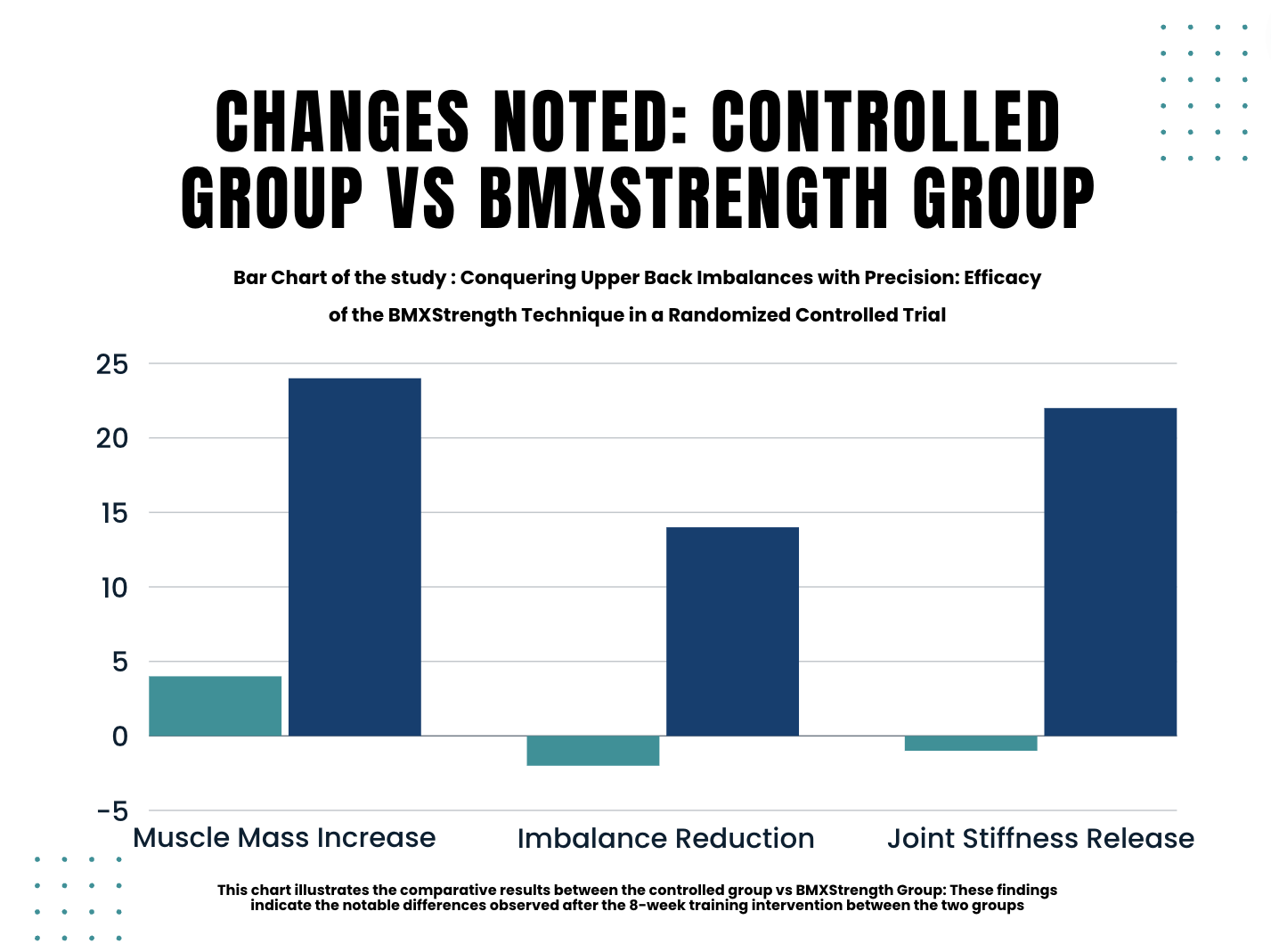
Conquering Upper Back Imbalances with Precision: Efficacy of the BMXSTRENGTH Technique in a Randomized Controlled Trial
Title: Addressing Upper Back Imbalances: Efficacy of the BMXStrength Technique in a Controlled Trial Abstract: Upper…
Read · Dec 2023